
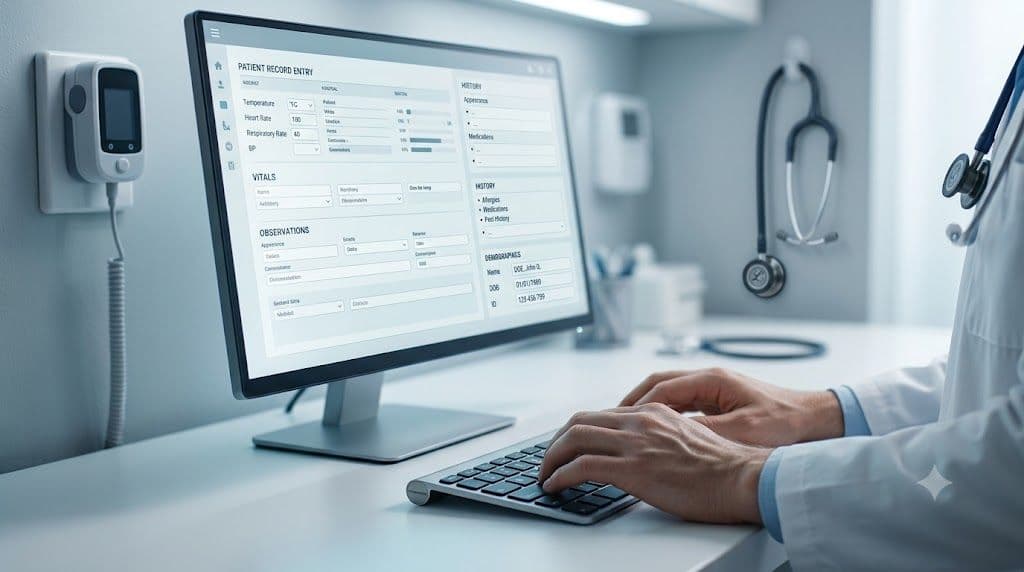
What's the difference between an EMR, EPR and EHR?
Ask three healthcare professionals for the definition of an Electric Medical Record or EMR, and you will likely have three different answers. Ask whether and EMR is the same as an EHR or an EPR and you'll have an argument on your hands.
The confusion is real but explicable.
There isn't a single definitive answer, of course.. The terms overlap, they shift over time, and reasonable people in the industry use them differently. What follows is an attempt to make sense of the terms. Other interpretations are available.
The differences stem from how much of a patient's life the record covers, and which country you happen to be standing in.
The short answer
All three terms describe a digital patient record. The distinction, where one is drawn, is about scope. We tend to think of it like this:
- An EMR is the record held by a single organisation.
- An EHR is a record designed to follow the patient across organisations.
- An EPR is, for practical purposes, the British word for an EMR.
That is roughly the whole answer in three lines — though, as ever, the edges are blurrier than the bullet points suggest. The detail is where it gets interesting — and where the geography comes in.
EMR: the single-site record
Electronic Medical Record is the oldest of the three terms. It came first, when paper charts were first digitised, and it carries that origin with it.
An EMR is the digital version of one provider's chart. It holds the demographics, diagnoses, medications, allergies, results and clinical notes generated within a single hospital or practice. It was built to replace paper, not to cross institutional boundaries.
Its strength is that it works within an organisation. Its limitation is the same fact stated differently: the record largely stops at the front door.
The term is dominant in North America and across the Asia-Pacific region. It is the language of US vendors, US policy and most of the global commercial market.
EHR: the shared, lifelong record
Electronic Health Record is the more ambitious term, and the more recent one.
The word that changes is the middle one. "Medical" describes what a clinician does in an encounter. "Health" describes the whole person, over time, across every setting that touches their care.
An EHR is designed to be longitudinal and shareable: a record that moves with the patient between the GP, the hospital, the laboratory and the community team. Interoperability is not a feature bolted on. It is the defining idea.
In the United States, EHR has steadily displaced EMR as the preferred institutional term. National bodies use it almost exclusively, and vendors increasingly relabel "medical record" systems as "health record" systems to signal that they share data rather than trap it.
EPR: the British term
Electronic Patient Record is the term you will hear in the United Kingdom, and rarely anywhere else.
Definitionally, an EPR is close to an EMR: a digital patient record held by a provider organisation. The NHS simply settled on "patient" where North America settled on "medical." It is largely a difference of dialect, not of substance.
In practice, modern NHS EPRs — the large hospital systems procured over the last decade — operate at a scope that the US would describe as EHR-level. The UK uses one word for what the American market now splits across two.
So why all the confusion? It's geography.
Here is the part most explanations miss.
The terms are used inconsistently not mainly because the concepts are subtle, but because they are regional.
Read an NHS board paper, a frontline digitisation strategy or a UK procurement framework, and you will see EPR. Read US vendor marketing, HIMSS material or federal health-IT policy, and you will see EMR and, increasingly, EHR.
The same physical system — Epic, Oracle Health, System C — is called an EMR, an EHR or an EPR depending on which country's brochure you are holding. The acronym often tells you where the document was written more reliably than it tells you what the software does.
Which term is winning out?
Globally, EMR remains the most widely used bare term, because the US market and US-headquartered vendors dominate the literature.
Within serious institutional usage, EHR is overtaking it, because the strategic conversation has moved from digitising records to sharing them.
In the UK, EPR is not going anywhere. It is embedded in policy, procurement and the language of the health service itself.
Why this matters more than vocabulary
It is tempting to treat all this as terminology. We tend to think it is more than that.
The words encode an assumption. EMR, EHR and EPR all describe systems whose core job is to record what happened. They are systems of record.
They were never designed to answer the three questions that matter most about a patient right now: What is happening now? What happens next? Who is responsible?
A record can tell you that a referral was made. It struggles to tell you whether it was received, actioned, or lost. That gap is not a documentation problem. It is a coordination problem — and it sits outside what any record system, by whatever name, was built to do.
This is the space CAREFUL occupies. Not another record of what happened, but a live, shared view of what is happening, what comes next, and who owns it — across teams, shifts and organisations.
The acronym debate is, in the end, a debate about systems of record.
The more important question is what sits beyond them.
None of the above is gospel. The definitions blur, usage drifts, and you will find thoughtful people who draw the lines differently. This is simply how we tend to see it — offered to help, not to settle the argument.
Frequently asked questions
Is an EMR the same as an EHR?
Not quite. An EMR is a digital record held within a single organisation. An EHR is designed to be shared across multiple organisations and to follow the patient over time. In everyday use the terms are often treated as interchangeable, but the intended distinction is scope and interoperability.
Is an EPR the same as an EMR?
Effectively, yes. Electronic Patient Record (EPR) is the term used in the United Kingdom for what North America calls an Electronic Medical Record (EMR). The definitions are essentially the same; the difference is regional vocabulary.
Why does the UK say EPR instead of EMR or EHR?
It is a matter of convention. The NHS and UK health policy adopted "Electronic Patient Record" as the standard term. EMR and EHR are North American and Asia-Pacific terms and are rarely used in UK healthcare settings.
Which term is most widely used worldwide?
EMR is the most common term globally, largely because of the size and influence of the US market. However, EHR is now the preferred term in US institutional and policy contexts, and EPR remains standard in the UK.
What is the main difference between an EMR and an EHR?
Interoperability. An EMR primarily serves a single provider. An EHR is built to exchange information across providers and care settings, giving a longitudinal, patient-centred view.
Do EMRs, EHRs and EPRs coordinate care?
No. All three are systems of record: they document what has happened. They are not designed to track live tasks, ownership and handovers across teams. Coordinating active care requires a dedicated coordination layer that works alongside the record system.
The CAREFUL team
Author
Categories
Related Articles

Are we seeing Innovation for All?
Despite the fanfare of digital transformation, many NHS technology programmes still fail to scale

The EMR was built around billing. That's been bad for patients and staff.
Most clinicians now spend more of their working day at a screen than with patients. This is not by accident. It is by design. An immediate and radical shift of perspective is needed to improve the digitisation of healthcare.
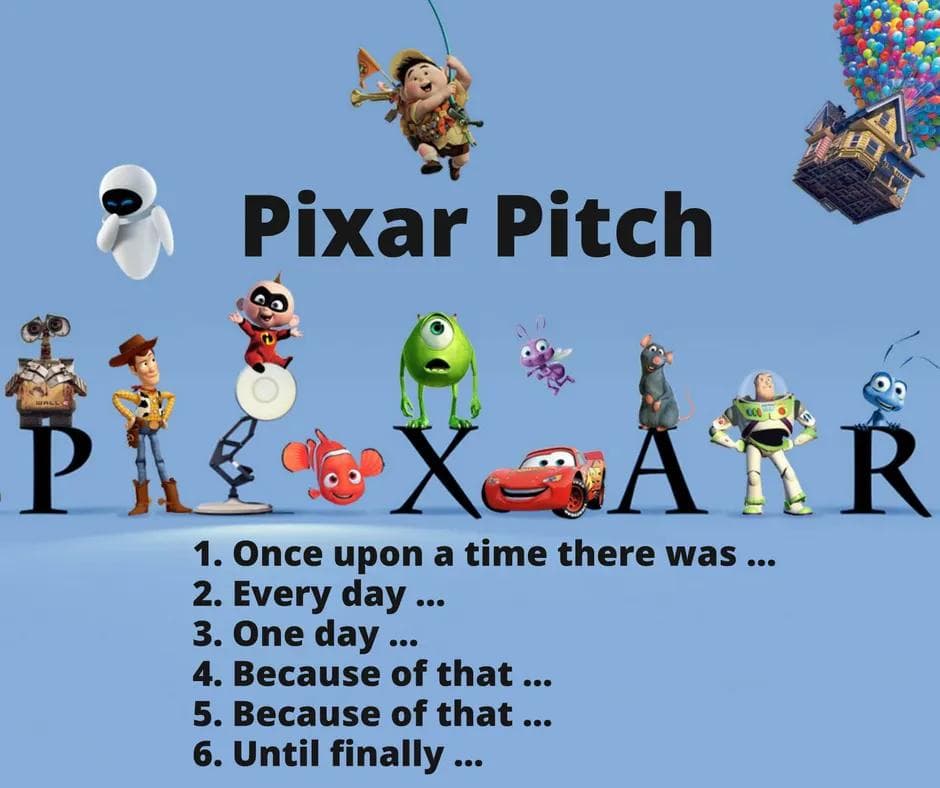
Pitching CAREFUL the Pixar way
What if we told you about CAREFUL using the Pixar Pitch? Using just six simple lead-in phrases creating a framework to convey a story. CAREFUL might be a clinical care coordination platform that saves time, money and – yes, even lives, but it's still at its core a compelling story. CAREFUL might not be Finding Nemo, but if you're a healthcare professional, this is what you want to see on your screen. Read the pitch and then get in touch. We'd love to tell you how our blockbuster will change your life – and that of your patients.