

The EMR was built around billing. That's been bad for patients and staff.
Most clinicians now spend more of their working day at a screen than with patients.
This is not by accident. It is by design.
The dominant EMR platforms were built around billing, with clinical features bolted on:
- The encounter is the unit of recording because the encounter is the billable event.
- Diagnoses are stored as ICD-10 codes because ICD-10 is the billing taxonomy.
- Notes are longer because Evaluation and Management coding rewards length.
- Order entry is tethered to charge capture.
- Discharge summaries are structured around DRGs (the Diagnosis-Related Groups by which Medicare pays for an entire admission).
This was rational in the United States, where the systems were built. It was a category error everywhere else.
How clinicians became data clerks
Christine Sinsky and colleagues at the American Medical Association published the definitive study in 2016. Using direct observation across four specialties, they found that physicians spent 27% of their time with patients and 49% on the EHR and desk work [1].
After-hours, a further one to two hours of "pajama time" on the electronic record [2].
In 2024, a multicentre observational study of 137 NHS Resident Doctors found they spent 73% of their time on non-patient-facing tasks and only 18% on patient-facing activities — four hours of administration for every hour with patients [3].
Clinically qualified staff, expensively trained, in chronic shortage, have been turned into highly-paid data entry clerks.
How we got here
The shape of the systems is not an accident. It is the result of fifteen years of policy.
In February 2009, the United States passed the Health Information Technology for Economic and Clinical Health Act — the HITECH Act — as part of President Obama's stimulus package [4]. Incentive payments began in 2011; financial penalties for non-adoption began in 2015 [5]. By 2015, US hospital EHR adoption had risen from below 10% to over 80% [6].
The United Kingdom had already attempted its own national programme. The National Programme for IT, launched in 2002 and dismantled in 2011, eventually cost an estimated £12.7 billion [7]. The Public Accounts Committee called it "one of the worst and most expensive contracting fiascos" the public sector had produced [8].
When the dust settled, NHS trusts were left to procure their own systems and increasingly chose those built primarily for the American market.
The friction crossed the Atlantic. The financial logic that justified the friction did not.
The cost is high. The cost is structural.
In March 2026, four NHS trusts in Somerset and Dorset signed a single contract worth £222 million for a unified electronic patient record system, projected to take until 2028 to deploy [9].
Industry analysts noted at the time that comparable ten-year contracts elsewhere in England, for systems serving similar populations, have been signed for under £40 million [10].
The reason is structural. International buyers of US-designed systems pay prices set by the American market, where billing-driven workflows generate the revenue that justifies them. Outside the United States, no such revenue stream exists.
The cost economics deserve their own treatment, and we will return to them. But even the headline figure makes the point: after a decade of consolidation, NHS regional EMR rollouts routinely run into nine figures. For a service in chronic financial pressure, this is a strange place to be.
Why ambient AI helps, but not enough
The enthusiasm for ambient voice technology is rational. AI scribes address real pain. They give clinicians back time at the keyboard.
But documentation is only about half of the data-clerk burden.
The other half is coordination. Chasing tasks. Finding owners. Completing handovers. Tracking referrals across teams. Knowing whether the bloods came back, whether the family was called, whether the discharge medications were ready.
None of this is documentation. None of it is solved by a better note.
A clinician with an AI scribe but no coordination layer finishes their notes faster and then spends the freed time chasing the same loose ends as before.
What comes next
Three questions are hardest to answer about any patient in any care setting:
What's happening now. What's happening next. Who is responsible.
EMRs were never designed to answer them. They record what happened. They are not coordinators of what's happening.
The next decade of healthcare digitisation will be defined by whoever builds the platform that answers the live questions across teams, shifts and organisations, in real time.
Healthcare has spent fifteen years digitising its billing.
The next ten must be spent digitising coordination.
That is the radical shift we need.
CAREFUL is what comes next. CAREFUL is what lies Beyond the EMR.
References
- Sinsky CA, Colligan L, Li L, et al. "Allocation of Physician Time in Ambulatory Practice: A Time and Motion Study in 4 Specialties." Annals of Internal Medicine, 165(11): 753–760, December 2016. https://doi.org/10.7326/M16-0961
- American Medical Association. "Family doctors spend 86 minutes of 'pajama time' with EHRs nightly." 2017. Drawing on event-log data from family physicians. https://www.ama-assn.org/practice-management/digital-health/family-doctors-spend-86-minutes-pajama-time-ehrs-nightly
- Time Allocation in Clinical Training (TACT) study. Multicentre observational cohort study of 137 NHS Resident Doctors, conducted January–July 2024 across secondary NHS centres, observed for four-hour periods. Future Healthcare Journal, 2024. PMC12676270. https://www.ncbi.nlm.nih.gov/pmc/articles/PMC12676270/
- Health Information Technology for Economic and Clinical Health Act (HITECH Act), Title XIII of the American Recovery and Reinvestment Act of 2009. Pub. L. 111–5. Signed February 17, 2009. https://www.hhs.gov/hipaa/for-professionals/special-topics/hitech-act-enforcement-interim-final-rule/index.html
- Centers for Medicare & Medicaid Services. "EHR Incentive Programs: Meaningful Use." Penalty schedule beginning 2015 with 1% reduction in Medicare reimbursement for non-adopters, rising to 3% by 2017. https://www.cms.gov/regulations-guidance/legislation/ehrincentiveprograms
- Henry J et al. "Adoption of Electronic Health Record Systems among U.S. Non-Federal Acute Care Hospitals: 2008–2015." Office of the National Coordinator for Health IT (ONC), Data Brief No. 35, 2016. https://www.healthit.gov/sites/default/files/briefs/2015_hospital_adoption_db_v17.pdf
- Charette RN. "NPfIT Dismantled: UK Government Announces End of its £12.7 Billion National Electronic Health Record Program." IEEE Spectrum, September 2011. https://spectrum.ieee.org/npfit-dismantled-uk-government-announces-end-of-its-127-billion-national-electronic-health-record-program
- UK Public Accounts Committee, House of Commons. "The dismantled National Programme for IT in the NHS." Forty-fifth Report of Session 2013–14, HC 294, September 2013. https://publications.parliament.uk/pa/cm201314/cmselect/cmpubacc/294/294.pdf
- Hawkes N. "Somerset and Dorset sign £222m contract for unified EPR." Digital Health News, March 2026. https://www.digitalhealth.net/2026/03/somerset-and-dorset-sign-222m-contract-with-epic-for-unified-epr/
- GlobalData analysts. "Federated EPR contract across Somerset and Dorset: market context." Hospital Management / Verdict, March 2026. https://www.hospitalmanagement.net/analyst-comment/epic-secures-federated-epr-contract/
DJ Hamblin-Brown
Author
Related Articles

Are we seeing Innovation for All?
Despite the fanfare of digital transformation, many NHS technology programmes still fail to scale
What's the difference between an EMR, EPR and EHR?
EMR, EHR, EPR — three acronyms, endless arguments, and no one fully agrees. The real reason for the confusion isn't complexity — it's geography. But beneath the jargon sits a bigger question, one your record system was never built to answer.
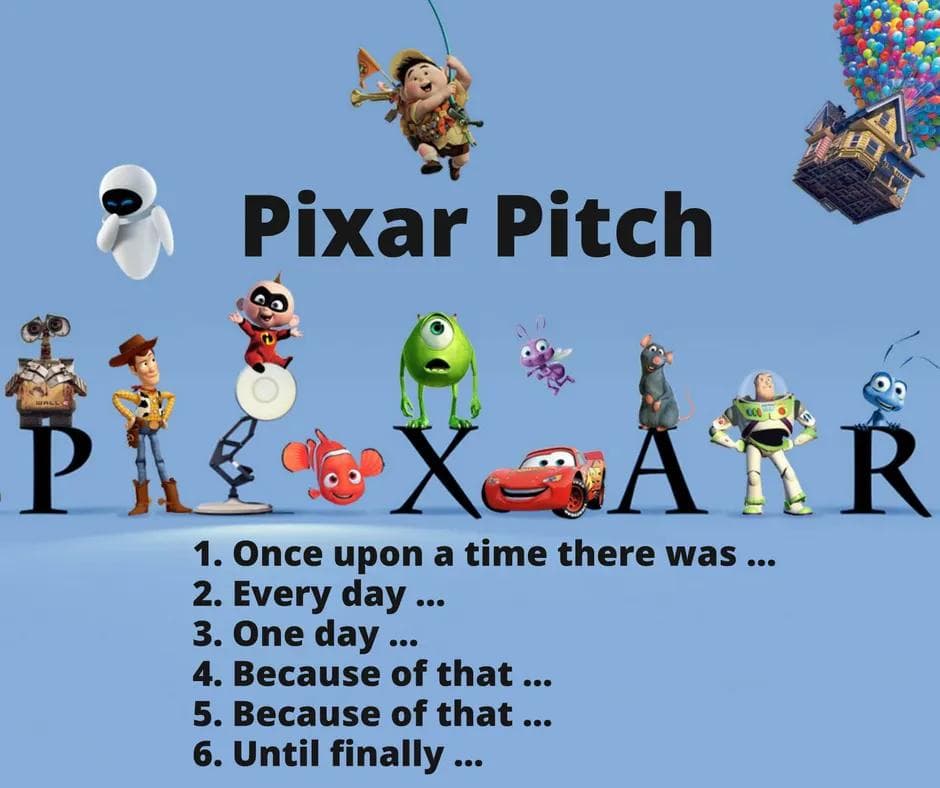
Pitching CAREFUL the Pixar way
What if we told you about CAREFUL using the Pixar Pitch? Using just six simple lead-in phrases creating a framework to convey a story. CAREFUL might be a clinical care coordination platform that saves time, money and – yes, even lives, but it's still at its core a compelling story. CAREFUL might not be Finding Nemo, but if you're a healthcare professional, this is what you want to see on your screen. Read the pitch and then get in touch. We'd love to tell you how our blockbuster will change your life – and that of your patients.