

Poor MDT coordination in cancer can cause harm. Is your tumour board platform up to scratch?
50,000 - 100,000 avoidable deaths.
Every year.
In Europe alone.
That is the estimated cost of failing to implement best practice in cancer care, according to an ASCO Educational Book article on the value of multidisciplinary team working.
Not deaths from untreatable cancers. Not deaths from a lack of drugs or equipment.
Deaths from failures of coordination, communication and follow-through.
A study published in BMC Cancer observed 30 tumour board meetings across breast, colorectal and gynaecological cancer teams and found that logistical challenges — administrative errors, missing patient information, equipment failures and absent key members — directly impaired the quality of information available and the quality of decision-making. A review in BJU International noted that MDT systems have come under increasing pressure from rising cancer incidence and financial constraints, and that remarkably little audit or research has been published on whether MDT decisions are actually implemented after the meeting ends. A Lancet Oncology review concluded bluntly that despite widespread adoption of MDT working, evidence demonstrating its effectiveness remains scarce.
The meeting happens. The actions do not. And patients pay the price.
The gap between the meeting and the outcome
When MDTs work well, patients benefit. A 2025 systematic review and meta-analysis in the European Journal of Cancer confirmed a survival benefit for patients whose cases were reviewed at MDT meetings. Nobody is questioning the value of multidisciplinary discussion. The question is whether the systems surrounding it are fit for purpose.
Most hospitals already have some form of MDT platform. Many offer case listing, video conferencing and outcome recording. These tools support the meeting itself. But they were not designed for what happens before, after and between meetings — which is where most of the real coordination takes place.
The pattern is familiar to anyone who works in cancer services. Communication gets lost between specialists. Critical imaging and reports disappear between systems. Decisions are delayed because key team members cannot attend at a fixed time. Follow-up tasks fall through the cracks between teams.
None of this is caused by a lack of skill or commitment. It is caused by tools and processes that were not designed for the full complexity of modern multidisciplinary cancer care. And the economic consequences are staggering: the cumulative global cost of cancer is projected to reach $25.2 trillion between 2020 and 2050, according to a JAMA Oncology analysis cited in the AACR Cancer Progress Report 2025. Better coordination will not solve all of that, but it can make a meaningful difference to how efficiently resources are used and how quickly patients reach treatment.
The WhatsApp problem
Meanwhile, clinicians are filling the coordination gap themselves — with tools that were never designed for clinical use.
In 2023, the UK Information Commissioner's Office reprimanded NHS Lanarkshire after staff shared patient data via WhatsApp more than 500 times over two years, including names, addresses and clinical images. A non-staff member was even added to the group by mistake. Research at St George's University Hospital NHS Foundation Trust found that 87 per cent of staff used smartphone apps to discuss patient cases at work, despite more than half not being sure the information was secure.
This is not recklessness. It is pragmatism. Clinicians use WhatsApp because the official systems do not give them what they need: fast, flexible, real-time communication that works across teams and organisations. The problem is that WhatsApp is neither auditable nor secure, and it creates a shadow record that sits outside the patient's formal care documentation.
Rethinking the tumour board
What if the MDT did not have to depend on everyone being in the same room at the same time? Asynchronous collaboration — where team members contribute their expertise when it suits them, within a shared and structured workflow — can transform how multidisciplinary reviews work. It eliminates scheduling conflicts, ensures that every relevant specialist can weigh in and creates a clear, timestamped record of who said what and when.
This does not mean abandoning face-to-face discussion. It means making sure that the discussion is better informed, better documented and less constrained by the logistics of getting busy people into the same place.
What CAREFUL brings to oncology coordination
CAREFUL is designed to replace fragmented tumour board workflows with something joined up — while working alongside, not instead of, existing EMRs and their oncology modules. It connects the people, information and actions that current systems leave scattered.
Four things set it apart.
Robust task management, so nothing gets lost. This is the heart of it. Every MDT decision generates a clear, assigned, time-bound action. Every task has an owner and a deadline. Every task is tracked to completion. If something is overdue, it is visible — not buried in an inbox. For cancer patients, where a missed follow-up can mean a missed treatment window, this is not a nice-to-have. It is essential. The BJU International review made exactly this point: there is very little published evidence on whether MDT recommendations are actually carried out. CAREFUL closes that gap by making implementation visible and accountable.
Cross-organisational collaboration. CAREFUL works across institutional boundaries. It connects providers in different hospitals, clinics and community settings within a single shared workflow. A surgeon at one trust, a medical oncologist at another and a palliative care team in the community can all see the same patient, the same plan and the same outstanding actions.
Secure real-time messaging. CAREFUL replaces WhatsApp and other informal messaging with purpose-built, encrypted chat and VOIP, keeping conversations linked to the patient record and creating a proper audit trail. No more scrolling through personal message threads to find a clinical decision. No more data sitting on someone's personal phone.
Ambient voice technology. CAREFUL's AI captures and structures notes from clinician-to-patient and clinician-to-clinician conversations. It understands clinical context, extracts actions and feeds them directly into the task management system. The conversation becomes the documentation. The documentation becomes the plan.
Integration, not replacement
CAREFUL is technology-agnostic. It integrates with existing EMRs — plural. In a world where a single patient's data may sit across two or three different systems in different organisations, this matters. CAREFUL does not ask anyone to rip out their electronic medical records. It connects what is already there.
Data remains with the provider and in-country. The platform is GDPR and HIPAA compliant. It is mobile-first, so critical information is available at the point of care. And onboarding takes minutes, not months — individual smartphone access with multi-factor authentication, no infrastructure changes required.
Proven in practice
In an aged care pilot in Australia, CAREFUL saved doctors 60 minutes per day on communication tasks. In a quality improvement project at an NHS hospital, the time to refer a patient between specialist teams dropped from 24 minutes to less than one. Over 90 per cent of staff reported improvements to workflow, safety and communication.
In oncology, where coordination complexity is at its highest and the cost of delay is measured in lives, these gains matter even more.
See it in action
We have put together a short video that walks through how CAREFUL supports multidisciplinary cancer coordination in practice:
👉 Better Cancer Coordination for Multidisciplinary Teams
Because coordination should not be the hardest part of cancer care
The treatments exist. The expertise exists. What is often missing is the connective tissue that holds them together — the ability to act quickly, communicate clearly and ensure that nothing falls through the gaps.
The meeting happens. What matters is what happens next.
That is what CAREFUL is designed to do. Faster, safer, better oncology coordination.
DJ Hamblin-Brown
Author
Categories
Related Articles

Are we seeing Innovation for All?
Despite the fanfare of digital transformation, many NHS technology programmes still fail to scale
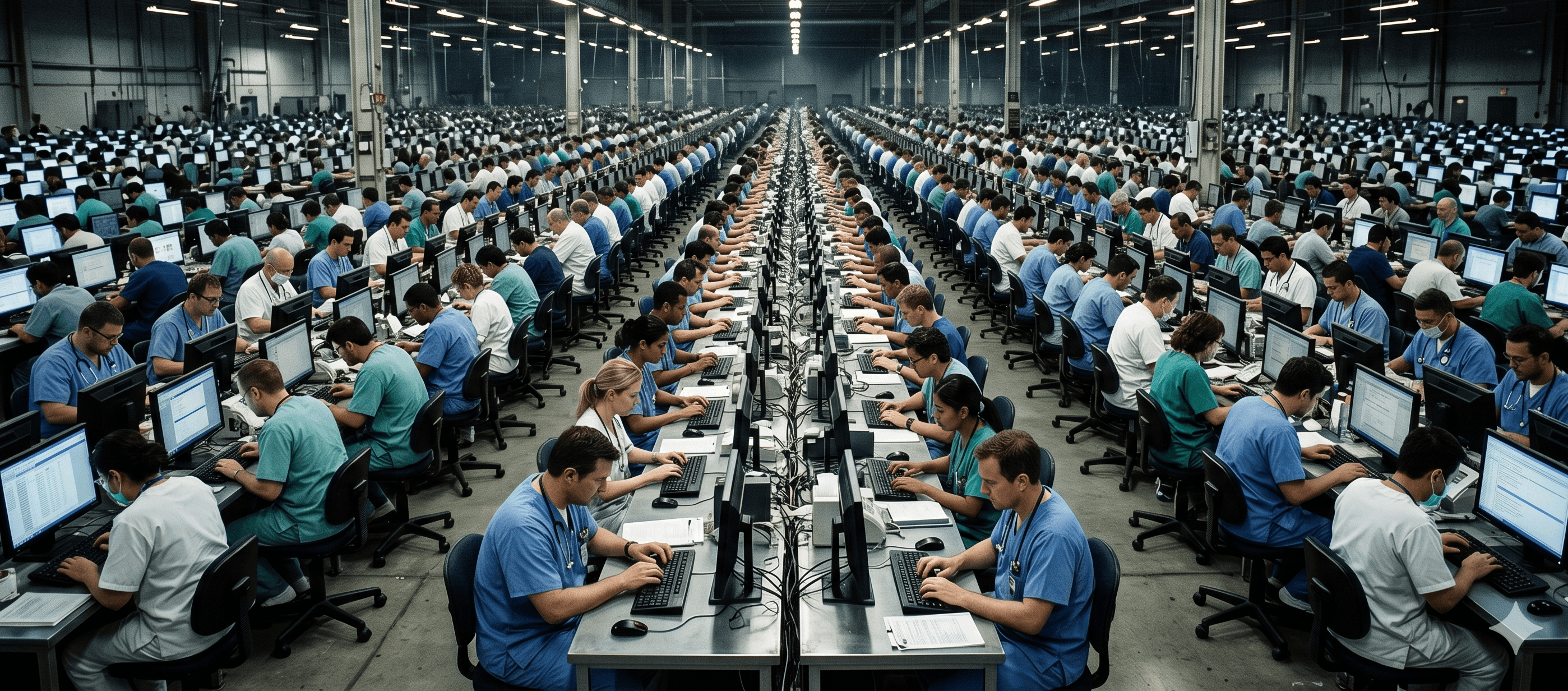
The EMR was built around billing. That's been bad for patients and staff.
Most clinicians now spend more of their working day at a screen than with patients. This is not by accident. It is by design. An immediate and radical shift of perspective is needed to improve the digitisation of healthcare.
What's the difference between an EMR, EPR and EHR?
EMR, EHR, EPR — three acronyms, endless arguments, and no one fully agrees. The real reason for the confusion isn't complexity — it's geography. But beneath the jargon sits a bigger question, one your record system was never built to answer.