

Are we seeing Innovation for All?
Despite the unrelenting fanfare of digital transformation, many technologies seem to enter and exit.... We see this in practice, in our own trusts and as patients.
Things aren't always connected at the start
The underlying issue is not a lack of innovation but a structural misalignment between frontline clinical needs, managerial decision-making priorities, and procurement and governance processes.
The misalignment runs deeper than disagreement. Each group is, in good faith, optimising for a different definition of success. For clinicians, a technology succeeds when it reduces cognitive load, ensures completed care, and removes the friction of managing incomplete tasks across fragmented systems. For managers, success tends to mean something more reportable: adoption rates, deployment timelines, cost-per-interaction metrics, a line on a slide. For vendors, success means signed contracts, referenceable sites and a growing list of logos. These three versions of "working" are not the same thing, and in practice they are rarely made explicit enough to reconcile. The result is a procurement process that appears to select for what is fundable and demonstrable over what is clinically transformative. Not because the people in the room lack good intent, but because no shared framework seems to exist at the commissioning table to force the harder question.
AVT is a good example
Nowhere is this clearer right now than in the rush toward ambient voice technology (AVT). AVT has become the defining innovation story of this NHS technology cycle: fast to demo, easy to fund, simple to report on a slide. Trusts are adopting it at pace, often because others already have, rather than because anyone has mapped it against where the bulk of the clinical burden sits.
AVT wins the procurement process for the same reasons it wins the board presentation. It is deployable without redesigning clinical workflow. Its benefit is immediately legible. Notes are written faster, consultation time expands (or at least that is the commonly held view?). So, as it allows minutes saved, the benefit is easy to measure and easy to communicate upward. We could argue that there is no guarantee that it allows for better patient engagement.
It does satisfy the manager’s need for a metric and the vendor’s need for a case study. What it does not do is surface in the categories clinicians describe when asked what is making their work unsustainable. It also helps that very large and growing players are throwing a lot of resources behind AVT and its promotion.
The trap of Singularity
This is the trap of singularity of innovation: when one visible, fundable solution comes to stand in for transformation itself. AVT genuinely reduces time spent writing notes. The jury is out whether the time saved is more than what it takes to then review and edit. What it does not do and was never designed to, is resolve the communication failures, fragmented follow-through, and accountability gaps that are the real drivers of clinical burnout, operational risk and patient harm in a resource-constrained system. The GP who dictates a plan for a referral and a follow-up blood test has saved three minutes on the note. She still has no reliable way to know whether either action was completed, by whom, and when.
The NHS has encountered this pattern before. The EPR rollouts of the 2000s and 2010s transformed what could be documented and retrieved but left the coordination layer: who does what next, and whether it was done, almost entirely untouched. Point optimisation failed to translate into system-wide gain, not because the technology was wrong but because it was aimed at the visible part of the problem rather than the consequential part.
For senior leaders, this creates a specific and underappreciated exposure: a programme can look successful by every metric a vendor or a manager would choose to report, while leaving the clinical bottleneck it was meant to solve completely unchanged. Patient flow in, within and out of a hospital remains an issue and largely unimproved because the pressures driving it were never only in the documentation layer to begin with. The investment is real. The adoption numbers are real. The operational impact, six months on, may not be.
The Fix
The fix is not to slow down adoption of AVT or any other promising technology. It is to be honest about what each tool has and has not solved, and to hold that question at the point of commissioning rather than after deployment. The right test is not “does this reduce documentation time” but “does this reduce the specific operational risk that clinicians are currently carrying?” Those are different questions, and in most trusts right now, few seem to be asking the second one.
We need a common and transparent understanding of what AVT has solved quickly, so that the other gaps can also be addressed. Not as a criticism of the technology, but as the honest next step that genuine transformation requires.
The CAREFUL team
Author
Related Articles

The EMR was built around billing. That's been bad for patients and staff.
Most clinicians now spend more of their working day at a screen than with patients. This is not by accident. It is by design. An immediate and radical shift of perspective is needed to improve the digitisation of healthcare.

What's the difference between an EMR, EPR and EHR?
EMR, EHR, EPR — three acronyms, endless arguments, and no one fully agrees. The real reason for the confusion isn't complexity — it's geography. But beneath the jargon sits a bigger question, one your record system was never built to answer.
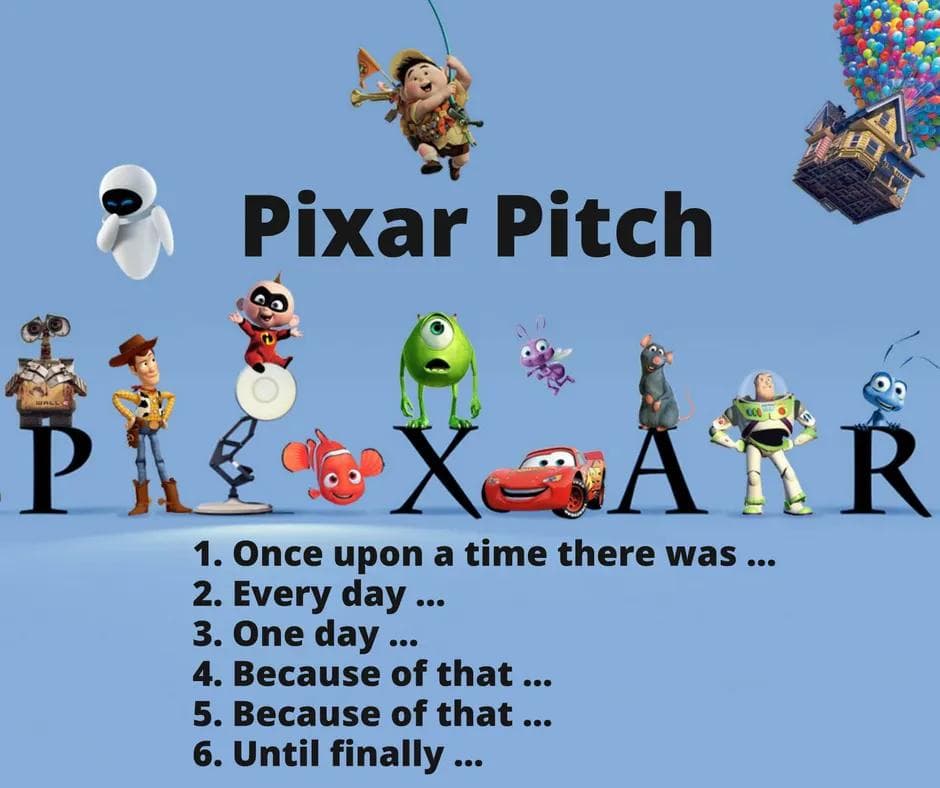
Pitching CAREFUL the Pixar way
What if we told you about CAREFUL using the Pixar Pitch? Using just six simple lead-in phrases creating a framework to convey a story. CAREFUL might be a clinical care coordination platform that saves time, money and – yes, even lives, but it's still at its core a compelling story. CAREFUL might not be Finding Nemo, but if you're a healthcare professional, this is what you want to see on your screen. Read the pitch and then get in touch. We'd love to tell you how our blockbuster will change your life – and that of your patients.